Giant Oak Tree
The Adventures of PinocchioThe Giant Oak Tree is a forest landmark whose importance comes from the stark change in what it means to Pinocchio: first a place of capture and apparent execution, it later becomes the spot where he meets The Fox and The Cat and identifies the place of his suffering. The tree gives a violent episode a precise location, then lets that location return as a visible reminder of the danger he survived.
Setting and Approach
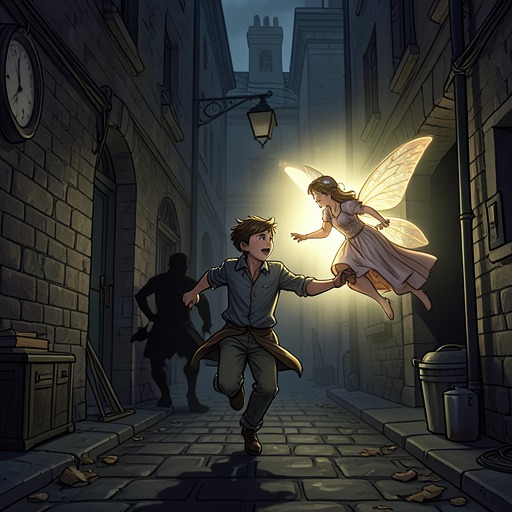
The oak stands among the trees of the forest, on the route Pinocchio takes after leaving the Fairy. As he runs from the Assassins, he spots a small cottage gleaming white among the trees and hopes to reach it before his pursuers catch him. The cottage is a possible refuge in his desperate flight; the oak, by contrast, becomes the place where that flight ends. The contrast between the bright house he glimpses and the high limb where the Assassins leave him suspended makes the forest journey turn abruptly from escape toward helplessness.
The tree is described through its height and strong limb, details that become practical instruments of the attack. The Assassins tie Pinocchio’s hands behind his shoulders, slip a noose around his neck, and throw the rope over a high branch. They pull until he hangs far above the ground. The oak is not simply scenery around the confrontation: its branch enables the Assassins to raise him beyond his own reach and leave him exposed.
The Hanging
After hanging Pinocchio, the Assassins sit on the grass to wait for him to die. Three hours pass, but his eyes remain open, his mouth stays shut, and his legs kick harder than before. That stubborn movement prolongs the scene beyond the attackers’ expectation; the tree holds him aloft while the passage of time tests whether his body will finally give way. The Assassins grow tired of waiting and leave, promising mockingly to return in the morning and find him dead.
The oak thus marks both the extremity of Pinocchio’s peril and the limits of the Assassins’ control. They can bind him and use the branch to suspend him, but they cannot make his death happen on their schedule. The scene’s measured three-hour wait makes the threat concrete without ending the episode there: Pinocchio remains in danger until help arrives.
Rescue and the View from the Forest
The Fairy sees Pinocchio hanging and helplessly knocked about by the wind. From her window, she claps her hands three times; a Falcon arrives at her signal. The view connects the oak’s exposed position to the act that interrupts the hanging: Pinocchio is visible from the Fairy’s window, and the sight of him prompts her response. The tree is therefore also the place from which his peril becomes an appeal for aid, even though he cannot summon that aid himself.
The episode reverses the Assassins’ intended ending. They have left Pinocchio suspended for death, but the Fairy acts while he is still alive. The oak remains the same physical instrument of danger; what changes is the course of events around it, as another character sees the helpless figure and intervenes.
Return to the Tree
Later, after the Fairy tells Pinocchio that he may go to meet Geppetto, he takes the wood path through the forest. At the Giant Oak Tree he stops, thinking he hears a rustle in the brush. The sound precedes a different encounter: The Fox and The Cat are there, greeting him as an old traveling companion. The tree is no longer the site of an immediate attack, but the forest still carries the possibility of danger and surprise.
When asked what happened to him, Pinocchio recounts that he ran from the Assassins, was overtaken, and was hanged from the oak’s limb. He points to the tree nearby as he tells the story. This gesture joins memory to landscape: the account is not an abstract warning about misfortune but a recollection anchored to the place where it happened. The Fox and The Cat can see the landmark Pinocchio identifies, while the reader recognizes it as the setting of the earlier ordeal.
Narrative Significance
The tree’s recurrence gives the episode a material aftermath. Pinocchio’s later meeting with The Fox and The Cat does not erase his hanging; the oak makes it available for retelling, and his pointing turns the location into evidence of what he endured. Its role shifts from a branch used by the Assassins to a landmark in Pinocchio’s account, preserving the connection between his reckless journey and its consequences.
The setting also sharpens the story’s contrast between danger and assistance. In the forest, Pinocchio first imagines that reaching a cottage may save him, then finds himself caught at the oak; rescue comes not from his escape plan but from the Fairy seeing him. When he returns to the tree, the encounter is no longer an execution scene, yet the memory of the rope and the Assassins gives the familiar spot a second meaning. The Giant Oak Tree is both a physical point in the forest and the place Pinocchio uses to mark a past crisis.